Kidney stones are one of the most painful conditions I treat in my practice. They affect nearly 1 in 10 people during their lifetime, and the risk is increasing in adults between 20 and 50 years of age National Kidney Foundation. While kidney stones were historically more common in men, the gap between men and women is steadily narrowing.
In this article, I will clearly explain how kidney stones develop and the medical and lifestyle methods we use to treat and prevent them.
How Do Kidney Stones Develop?
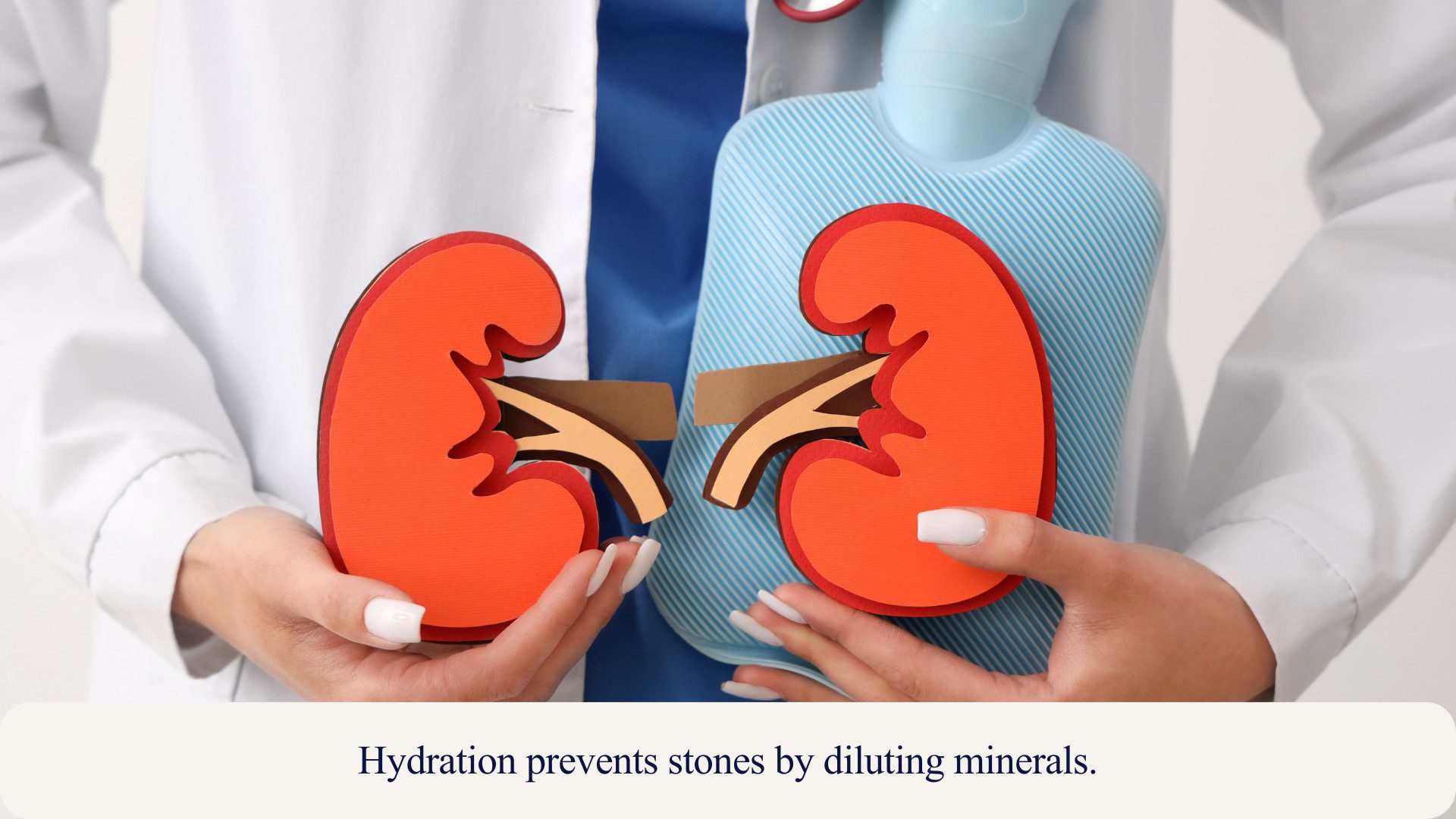
Kidney stones form when urine becomes concentrated, allowing minerals and salts to crystallize. Normally, urine contains substances that prevent crystal formation. However, when the balance shifts, stones begin to develop.
According to the Mayo Clinic, stones form when urine contains more crystal-forming substances, such as calcium, oxalate, and uric acid, than the fluid in urine can dilute.
1. Dehydration: The Most Common Cause
The most overlooked yet most common cause is low fluid intake. When I see young working professionals with stones, dehydration is often the primary trigger. Not drinking enough water leads to concentrated urine, which increases crystal formation.
Hot climates, heavy sweating, and long working hours without hydration significantly increase risk.
2. Dietary Factors
Many patients believe stones are caused simply by eating calcium. That is not entirely accurate.
Key dietary contributors include:
- High sodium intake (increases calcium in urine)
- Excess animal protein (raises uric acid levels)
- High oxalate foods (spinach, nuts, chocolate)
- Sugary beverages
Interestingly, normal dietary calcium actually helps prevent stones, while excessive calcium supplements may increase risk. This is a detail many websites fail to explain clearly.
3. Metabolic and Hormonal Conditions
Certain medical conditions increase stone formation:
- Hyperparathyroidism (overactive parathyroid glands)
- Gout (high uric acid levels)
- Obesity and metabolic syndrome
- Digestive diseases like Crohn’s disease
These conditions alter how the body processes calcium and other minerals.
4. Genetics and Family History
If a close family member has had kidney stones, your risk increases significantly. Rare inherited disorders such as cystinuria also cause recurrent stones at a young age.
5. Medications and Supplements
High doses of vitamin C, some diuretics, and certain antiviral medications can increase stone risk. I always review a patient’s medication history when evaluating recurrent stones.
What Symptoms Do Kidney Stones Cause?
The classic symptom is sudden, severe flank pain that may radiate to the lower abdomen or groin. Patients often describe it as the worst pain they have experienced.
Other symptoms include:
- Blood in urine
- Burning during urination
- Nausea and vomiting
- Urgency to urinate
- Fever (if infection develops)
A stone with fever is a medical emergency and requires immediate attention.
How Are Kidney Stones Diagnosed?
To confirm a diagnosis, I typically recommend:
- Urine analysis
- Blood tests
- Imaging studies, such as an ultrasound or a CT scan
Imaging helps determine the size and location of the stone, which guides treatment decisions.
How Do We Treat Kidney Stones?
Treatment depends mainly on the size, location, and severity of symptoms.
1. Conservative (Non-Surgical) Management
Small stones (usually under 5 mm) often pass naturally.
I advise:
- Drinking enough fluids to produce at least 2–2.5 liters of urine daily
- Pain relief medications (commonly NSAIDs)
- Alpha-blockers to relax the ureter and help the stone pass
This approach works for many patients.
2. Minimally Invasive Procedures
If a stone is too large to pass or causes persistent pain, infection, or obstruction, medical procedures are required.
Extracorporeal Shock Wave Lithotripsy (ESWL)
Sound waves break the stone into smaller fragments that can pass naturally.
Ureteroscopy
A small scope is passed through the urinary tract to remove or break the stone using a laser.
Percutaneous Nephrolithotomy (PCNL)
Used for large stones, this procedure removes the stone through a small incision in the back.
According to the Mayo Clinic, these minimally invasive techniques have high success rates and allow faster recovery compared to traditional surgery.
What Most Websites Do Not Emphasize: Recurrence Risk
Kidney stones are not a one-time problem. Studies show that up to 50% of patients may develop another stone within five years if preventive measures are not taken, National Institute of Diabetes and Digestive and Kidney Diseases.
This is why I strongly recommend a metabolic evaluation for recurrent stone formers. Identifying the stone type allows personalized prevention strategies.
Lifestyle Methods to Prevent Future Stones
Prevention is always better than treatment. I advise my patients to:
- Drink water consistently throughout the day
- Limit sodium intake
- Reduce excessive animal protein
- Maintain a healthy body weight
- Increase citrate intake (natural sources like lemon water help)
Urine color is a simple guide. Pale yellow usually indicates adequate hydration.
Final Thoughts
Kidney stones develop when urine becomes concentrated, and minerals crystallize. Dehydration, diet, metabolic disorders, genetics, and certain medications all play a role.
The good news is that most stones can be treated effectively with medical management or minimally invasive procedures. However, long-term prevention requires lifestyle adjustments and, in some cases, targeted medical therapy.
If you understand why stones form and take proactive steps, you can significantly reduce your risk of recurrence. As I often tell my patients, hydration and awareness are your best defenses.
Frequently Asked Questions (FAQ)
1. What are the main causes of kidney stones in adults?
- Kidney stones develop when urine becomes concentrated with minerals like calcium, oxalate, and uric acid, often due to dehydration, high salt or animal protein diets, and metabolic factors.
2. Can dehydration really trigger kidney stones?
- Yes. In hot climates or low fluid intake, urine becomes concentrated, and minerals crystallize, significantly increasing the risk.
3. Are there foods that increase my risk of stones?
- High salt, sugary drinks, excessive animal protein, and certain high-oxalate foods can raise your risk. Balanced hydration and diet reduce stone formation.
4. Can home remedies like drinking beer help pass a stone?
- No. Alcohol can dehydrate you further and does not reliably pass stones. Proper hydration and medical guidance are essential.
5. How common is kidney stone disease in India?
- Studies suggest up to ~12% of Indian adults develop stones, with calcium oxalate stones being the most common.