
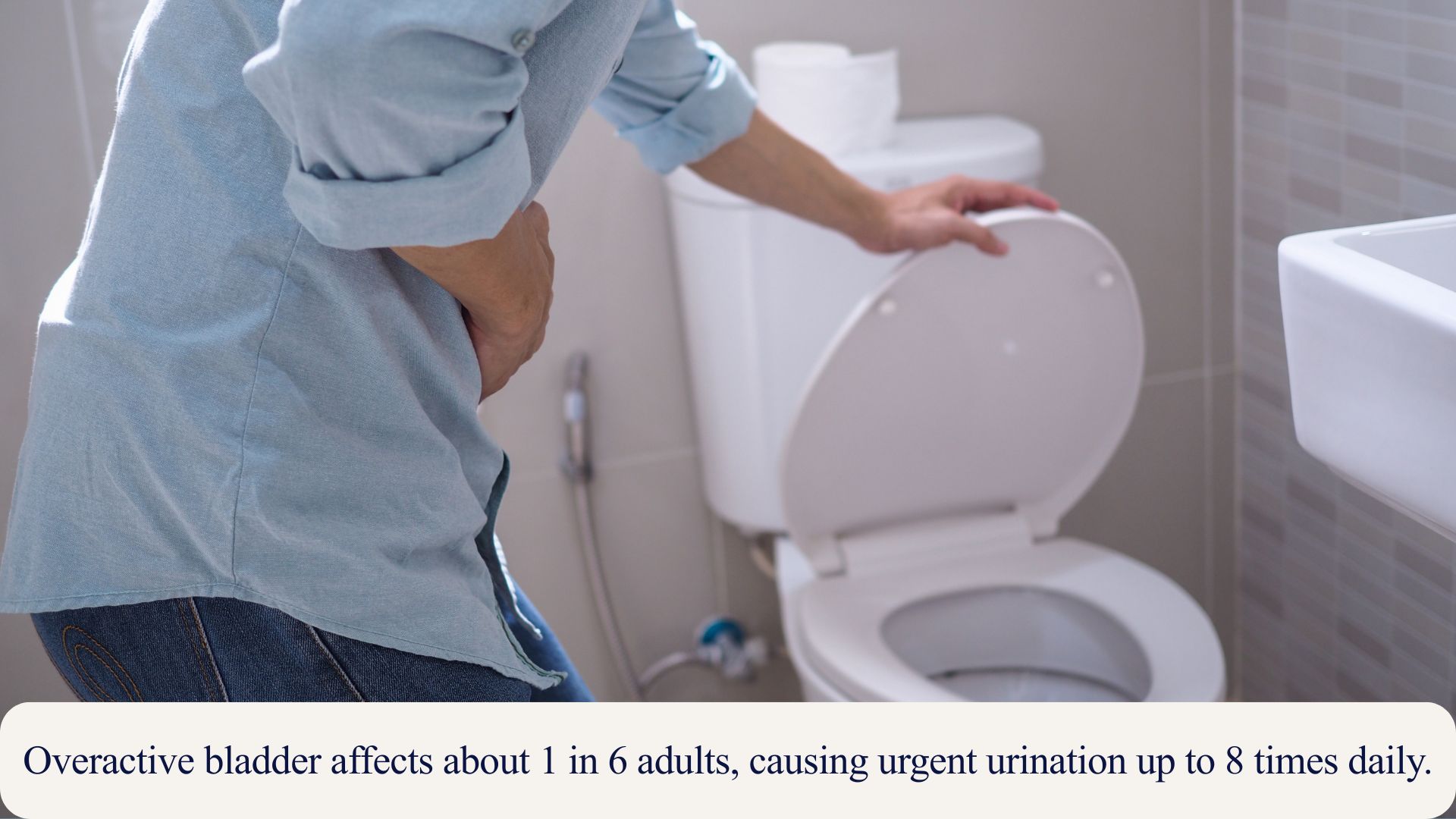
If you find yourself mapping out every restroom in a shopping mall or waking up four times a night just to use the bathroom, you aren’t alone. In my practice, I see patients every day who feel like their lives are being held hostage by their bladders.
Many people believe a “weak bladder” is an inevitable part of aging. I am here to tell you that while your body changes, suffering from a sudden, uncontrollable urge to urinate is a medical condition, not a requirement of turning 60. To regain your freedom, we must answer two questions: Why is your bladder behaving this way, and what is making it worse right now?
The Internal “Misfires”: Why the Biology Changes
As we age, the communication between our brain and our bladder can become “noisy.” Ideally, your bladder should stay relaxed as it fills, only signaling your brain when it is nearly full. In Overactive Bladder (OAB), the bladder muscle (the detrusor) contracts involuntarily, even when it only contains a few teaspoons of urine.
1. Loss of Elasticity and “The Prostate Factor”
In my male patients, an enlarged prostate (BPH) often acts as a physical roadblock. This forces the bladder to squeeze harder to push urine out. Over time, the bladder muscle becomes over-thickened and “twitchy,” leading to urgency. For my female patients, the decline in estrogen during post-menopause thins the lining of the urethra and bladder, making the entire area hypersensitive to even the slightest amount of fluid.
2. The Bladder-Gut-Brain Axis
One factor most websites overlook is the role of systemic inflammation. Recent 2025 research suggests that an imbalance in gut bacteria can send inflammatory signals through shared nerve pathways to the bladder. If your gut is “angry,” your bladder often reacts in sympathy. This neurological cross-talk is why you might feel a sudden urge the moment you put your key in the front door.
The External “Sparks”: What is Making it Worse?
While the causes above are the underlying “fire,” your daily habits are often the “fuel” that makes symptoms unbearable.
1. The Dehydration Paradox
Many seniors tell me, “I stopped drinking water so I wouldn’t have to go so often.” This is actually a mistake. When you are dehydrated, your urine becomes highly concentrated, dark, and acidic. This concentrated urine acts as a chemical irritant to the bladder lining, triggering the very spasms you are trying to avoid.
2. Hidden Dietary Triggers
While caffeine is a well-known culprit, I often find that artificial sweeteners (like those in diet sodas) and acidic foods (tomatoes, citrus, or spicy dishes) are the hidden triggers. These substances can cross the bladder-blood barrier and directly irritate the detrusor muscle.
3. The “Neighbor” Effect
Because the rectum and bladder sit right next to each other, chronic constipation is a major trigger for OAB in the silver demographic. A full bowel puts physical pressure on the bladder, reducing its capacity and “sparking” an immediate urge to void.
By the Numbers: The Reality of OAB
Recent data indicate that OAB prevalence in India among those over 60 has risen to nearly 24%. Furthermore, seniors with untreated OAB are 2.5 times more likely to suffer a fall-related injury due to ‘toilet mapping’ and rushing to the bathroom at night.
How You Can Take Control Today
I always tell my patients that we cannot fix what we do not measure. I recommend starting a 48-hour Bladder Diary. Write down what you drink, when the urges happen, and what you ate beforehand. Often, the “smoking gun” is a specific habit, like that 4:00 PM cup of tea or a specific medication.
You can also practice “Quick Flicks.” When a sudden urge hits, performing three to five quick pelvic floor contractions (Kegels) sends a reflex signal back to your brain, telling the bladder muscle to relax. This “buys you time” to walk, not run, to the restroom.
Final Thoughts
Your bladder is a complex system of muscles and nerves. If it is misbehaving, it is usually trying to tell you something about your internal biology or your external environment. By identifying the root causes and removing the triggers, we can quiet the “false alarms” and get you back to enjoying your life.
Frequently Asked Questions
1. Is my frequent urination just a normal sign of getting older?
No. While your bladder capacity may decrease slightly with age, a sudden, uncontrollable urge is not “normal.” It is a medical condition often caused by nerve signaling issues or muscle changes. I encourage you to seek an evaluation rather than accepting it as an inevitable part of aging.
2. Can my love for spicy food and chai be making my bladder worse?
I’m afraid so. In our Indian diet, the high acidity in spicy masalas and the caffeine in strong tea (chai) are potent bladder irritants. These “triggers” inflame the bladder lining, causing it to spasm. I recommend reducing these for a week to see if your urgency improves.
3. Does my diabetes have anything to do with my bladder issues?
Absolutely. High blood sugar can cause your body to produce more urine and, over time, damage the nerves that control your bladder. I often find that when we stabilize a patient’s glucose levels, their frequent trips to the bathroom significantly decrease.
4. Why do I feel the urge to go more often during the winter months?
This is a common phenomenon called “cold diuresis.” When you’re cold, your blood vessels constrict to keep your core warm, which increases your blood pressure. Your kidneys then filter out excess fluid to compensate, filling your bladder faster and triggering that familiar sense of urgency.
5. Will I need surgery to fix my overactive bladder?
Rarely. For the vast majority of my patients, we achieve excellent results through “first-line” therapies. This includes bladder retraining, pelvic floor exercises, and simple dietary adjustments. I only consider more advanced interventions or surgery after we have exhausted these non-invasive, lifestyle-based options.