
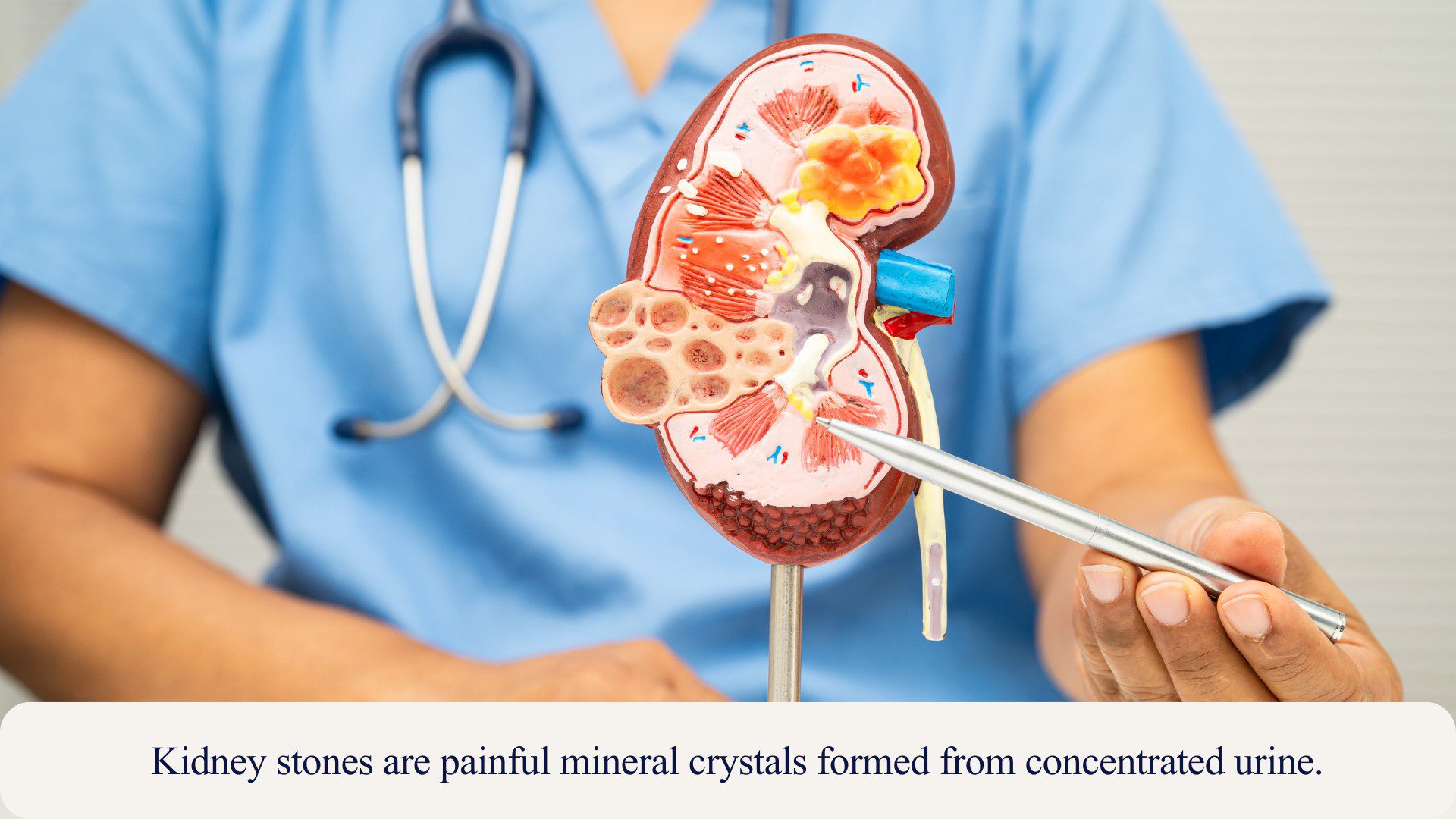
Kidney stones are more common than many people realize. Research shows that about 1 in 10 people will develop a kidney stone during their lifetime, according to the National Kidney Foundation. The risk increases with age due to dehydration, medical conditions, and certain medications.
As a urologist, one of the most common questions my patients over 65 ask is:
“How do I know if I have a kidney stone?”
Let me explain clearly and simply.
What Is a Kidney Stone?
A kidney stone is a hard deposit made of minerals and salts that forms inside the kidney. Stones develop when urine becomes concentrated, allowing minerals to crystallize and stick together.
Most stones begin in the kidney and may move into the ureter, the narrow tube connecting the kidney to the bladder. It is this movement that usually causes symptoms.
The Most Common Signs of a Kidney Stone
If you want to identify a kidney stone early, pay close attention to the following symptoms:
1. Sudden, Severe Pain
This is the most classic symptom.
I often describe kidney stone pain as:
- Sharp and intense
- Located in the back or side (flank area)
- Spreading toward the lower abdomen or groin
- Coming in waves
This pain, called renal colic, can fluctuate in intensity as the stone moves. In seniors, however, pain may sometimes be less dramatic but still persistent.
2. Blood in the Urine
You may notice:
- Pink, red, or brown urine
- Or blood detected only on lab testing
Even small stones can irritate the urinary tract and cause bleeding. If I see unexplained blood in the urine in a patient over 65, I always investigate carefully.
3. Burning or Pain During Urination
When a stone moves closer to the bladder, you may feel:
- Burning
- Irritation
- Increased urgency
Many seniors mistake this for a urinary tract infection (UTI). The symptoms overlap, which is why testing is important.
4. Frequent Urination or Urgency
If you suddenly feel the need to urinate more often, especially in small amounts, it could be a stone irritating the lower urinary tract.
This symptom is commonly overlooked.
5. Nausea and Vomiting
Severe pain can trigger nausea. The nerves connecting the kidneys and stomach share pathways, which explains this reaction.
Symptoms Seniors Often Miss
This is where many websites stop, but older adults may experience subtle warning signs:
- Mild back discomfort before severe pain begins
- Nighttime urination that feels different from usual
- Confusion or weakness if dehydration or infection develops
In older adults, kidney stones can also coexist with infection. If infection occurs, the situation becomes more serious.
When Is It an Emergency?
I advise immediate medical care if you experience:
- Fever and chills (possible infection)
- Inability to urinate
- Severe, unrelenting pain
- Persistent vomiting
- Dizziness or fainting
An infected obstructed kidney stone can become life-threatening if not treated quickly.
How I Confirm the Diagnosis
If I suspect a kidney stone, I typically order:
- Urinalysis
- Blood tests
- Imaging, often a CT scan or ultrasound
Imaging allows me to confirm the stone’s size and location. This determines whether it will likely pass on its own or require treatment.
What Should You Do If You Suspect a Kidney Stone?
If symptoms are mild:
- Increase fluid intake (unless restricted for heart or kidney conditions)
- Call your primary care doctor or urologist
- Monitor your pain and urine changes
If symptoms worsen or red flags appear, seek urgent care. Early evaluation often prevents emergency room visits.
Can Kidney Stones Pass on Their Own?
Yes. Many stones smaller than 5 millimeters pass naturally. However, pain control and monitoring are essential.
Larger stones may require:
- Medication to help with passage
- Shock wave treatment
- Minimally invasive procedures
I always tailor treatment based on the patient’s age, medical history, and overall health.
Final Thoughts
If you are asking yourself, “Do I have a kidney stone?”, focus on these key signs:
- Sudden flank pain
- Blood in urine
- Burning or urgency
- Nausea with urinary symptoms
In older adults, symptoms may be subtle. That is why I encourage my patients not to ignore changes in urination or unexplained pain.
Early recognition is the best way to prevent complications and avoid unnecessary emergency visits.
If something feels unusual, I recommend seeking medical advice promptly. When it comes to kidney stones, acting early makes all the difference.
Kidney Stone Symptoms FAQ: Quick Answers
1. What are the earliest signs of a kidney stone?
- Early signs include mild flank or lower back discomfort, frequent urination, and cloudy or foul-smelling urine before severe pain begins.
2. How can I tell if my pain is a kidney stone or something else?
- Kidney stone pain is usually sharp, comes in waves, and radiates from the back to the groin. Sudden onset with urinary changes points more toward stones than muscle strain.
3. Can a kidney stone cause blood in urine without pain?
- Yes. Even small stones can irritate the urinary tract and cause blood in the urine without severe pain.
4. Is nausea a symptom of a kidney stone?
- Yes. Intense pain from a moving kidney stone can trigger nausea or vomiting as a stress response.
5. How do I know if a kidney stone is passing?
- You may feel cramping pain, increased urge to urinate, or notice fragments in the urine. Only imaging or medical tests can confirm passage.