
As a urologist and andrologist, I often tell my patients that the pelvic floor is the “invisible foundation” of the human body. Whether you are recovering from childbirth, managing post-prostatectomy recovery, or simply looking to enhance your sexual health, mastering these muscles is one of the most proactive steps you can take for your long-term well-being.
However, I see a recurring problem in my clinic: many people perform these exercises incorrectly, which can lead to frustration or even exacerbation of symptoms. Today, I want to show you how to correctly identify, train, and maintain your pelvic floor to treat issues like incontinence and sexual dysfunction.
Finding the Right Muscles: The “Search and Rescue” Phase
The first hurdle is isolation. You cannot strengthen a muscle you cannot find. In my practice, I suggest specific cues depending on your anatomy:
- For Men: Imagine you are walking into cold water and need to lift your testicles. You should feel a slight “pulling up” sensation at the base of the penis.
- For Women: Imagine you are trying to pick up a marble with your vagina and lift it toward your belly button.
A Professional Warning: Many articles suggest stopping your urine stream to identify these muscles. Do not make this a habit. Frequently interrupting urination can confuse the bladder-brain connection, potentially leading to urinary tract infections (UTIs) or incomplete bladder emptying. Use this “stop-test” only once to identify the sensation, then move on.
The Mastery Protocol: Quality Over Quantity
Once you have identified the muscles, the goal is functional coordination. Research published in the Journal of Urology suggests that nearly 30% of patients perform Kegels by straining downward rather than lifting upward—a mistake that can actually worsen pelvic organ prolapse.
Here is the routine I recommend to my patients:
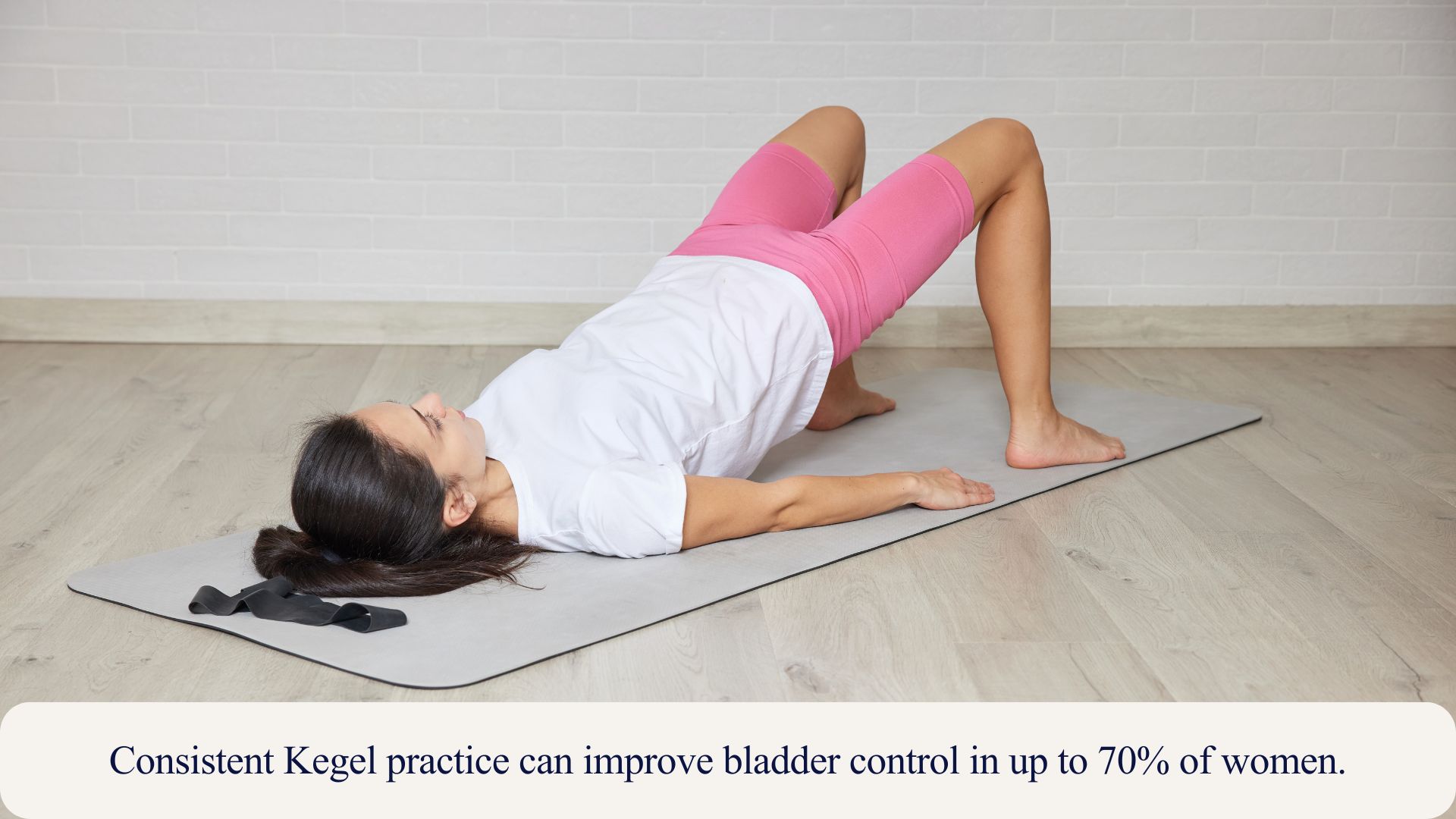
- The Isolation Check: Lie on your back with your knees bent. Ensure your breath is steady. If you are holding your breath or squeezing your glutes, you are “cheating.”
- The Long Lift (Endurance): Contract your pelvic floor and hold for 3 to 5 seconds.
- The Essential Release: This is the part most websites miss. You must consciously relax the muscle for the same amount of time you held it. A muscle that cannot fully relax becomes “hypertonic,” which can lead to pelvic pain or urinary hesitancy.
- The Quick Flick (Power): Rapidly contract and release 5 times.This trains the “fast-twitch” fibers needed to prevent leakage when you cough or sneeze—a technique known in clinical circles as “The Knack.”
The Prescription: Aim for 10 repetitions of each, three times a day.
Why It Works: The Clinical Evidence
According to the National Institutes of Health (NIH), approximately 25% of women and 16% of men suffer from some form of pelvic floor dysfunction. By consistently performing these exercises, you are engaging in “neuroplasticity”—teaching your brain and muscles to communicate more efficiently.
For my male patients, these exercises are a frontline treatment for erectile dysfunction and premature ejaculation.By strengthening the ischiocavernosus and bulbocavernosus muscles, you improve blood flow and physical control. For my female patients, this routine is the gold standard for treating stress incontinence and improving vaginal tone after delivery.
When Kegels Aren’t the Answer
As a specialist, I must offer a caveat: More is not always better. If you experience chronic pelvic pain, pain during intercourse, or a “tight” feeling in the pelvis, you may have a hypertonic (overactive) pelvic floor. In these cases, traditional Kegels can cause more harm than good. If you don’t see improvement after six weeks of consistency, it is time to see a specialist for a personalized evaluation.
Final Thoughts
Mastery isn’t about doing hundreds of reps; it’s about the precision of the lift and the completeness of the relaxation. Be patient with yourself. Like any other form of physical therapy, results take time—usually between 4 to 8 weeks to notice a significant shift in control and confidence.
Frequently Asked Questions
As your specialist, I want to address the most common concerns I hear in my clinic. Understanding these nuances is often the difference between “trying” Kegels and actually seeing life-changing results.
1. Can Kegel exercises really improve my “timing” and stamina?
Yes, they can. By strengthening the pelvic floor muscles—specifically the ischiocavernosus and bulbocavernosus—you gain significantly better control over the ejaculatory reflex. Regular practice helps you manage physical arousal levels more effectively, leading to improved endurance and more intense orgasms.
2. Is it safe to do these exercises during my period or pregnancy?
Absolutely. In fact, I highly recommend them. During pregnancy, they support the extra weight of the growing uterus and help prevent postpartum leakage. During your period, gentle contractions can actually help ease pelvic congestion, though you should stop if you feel any unusual discomfort.
3. I feel a “heaviness” in my lower pelvic area; will Kegels help?
This sensation often indicates a mild prolapse or muscle weakness. Strengthening the “hammock” of muscles will provide better support for your internal organs. However, if the heaviness is accompanied by sharp pain, please consult me first to rule out a hypertonic (overly tight) pelvic floor.
4. How long does it take to see permanent results?
There are no “permanent” results without maintenance, but you will likely notice improved bladder control and sensation within 4 to 8 weeks. Like any gym routine, once you reach your goal, you should continue a “maintenance” set 3–4 times a week to keep the muscles toned.
5. Can I practice Kegels while sitting in my office or driving?
Yes—and that is the beauty of them! Because the movement is internal, no one will know you are exercising. I suggest tying your reps to a daily habit, like sitting at a red light or checking your emails, to ensure you never miss a session.