
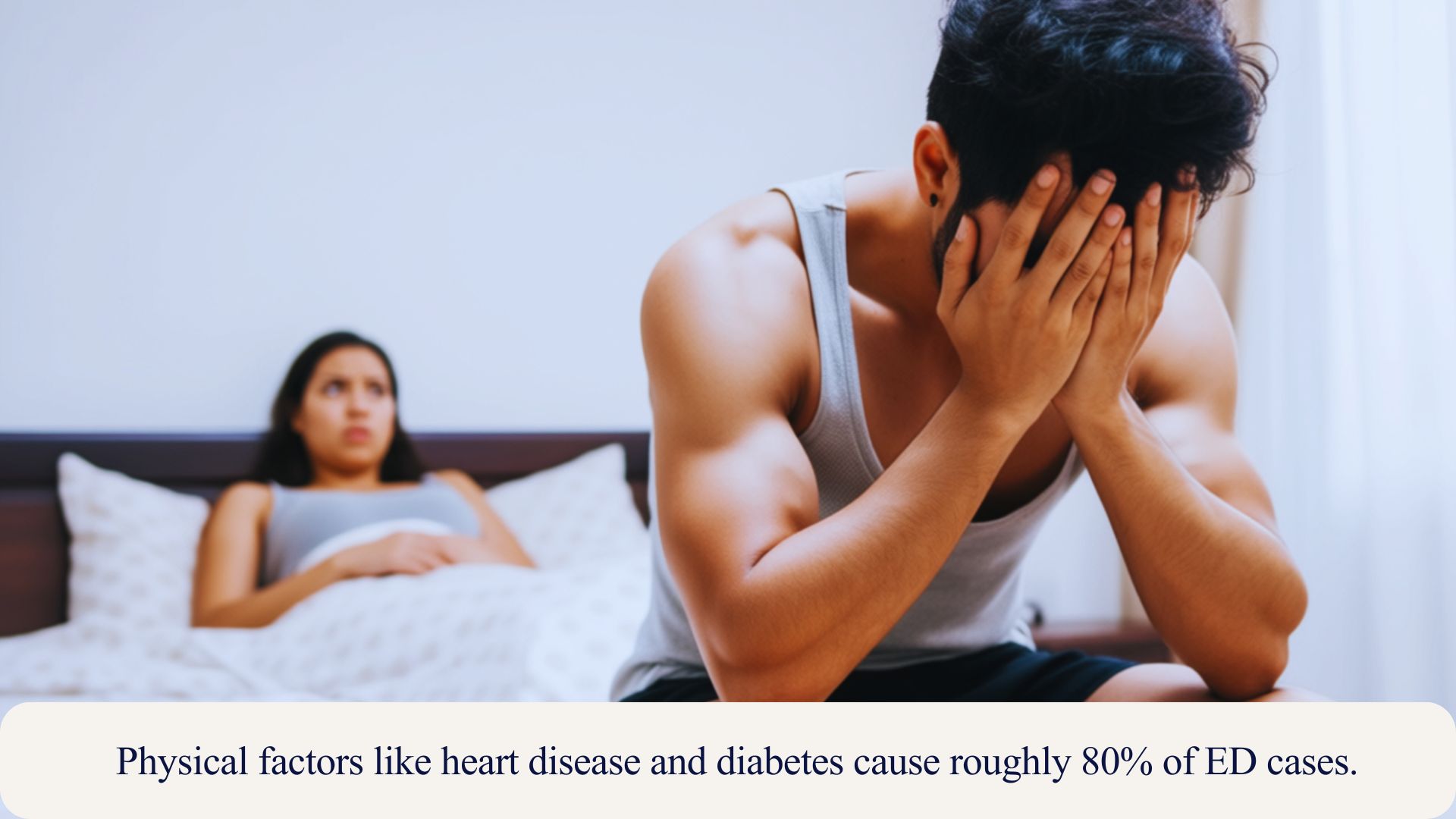
I see many men who believe that erectile dysfunction (ED) is simply “stress” or “age catching up”. In my practice, I explain clearly: while stress or anxiety can play a role, ED very often signals a medical cause. Recognising that early makes a difference for your health, not just your sex life.
What is Erectile Dysfunction? Definition and Prevalence
Erectile dysfunction is the recurrent inability to obtain or maintain an erection sufficient for satisfactory sexual activity. Worldwide and in India, it is far more common than many realise.
One study in North India found that among men with type 2 diabetes, the prevalence of ED was over 60 %. Another Indian outpatient study found ED in about 54 % of men aged 40-70.
Because ED often accompanies serious conditions, such as cardiovascular disease, diabetes, and hypertension, it is not just a quality-of-life issue. It may be an early warning.
Organic vs Psychogenic Erectile Dysfunction: What’s the Difference?
I always explain this:
- Organic (physical) ED means your body’s hardware is the problem: blood vessels, nerves, hormones, and structure.
- Psychogenic (psychological) ED means stress, anxiety, relationship issues, or mental health issues weigh heavily.
Many men have a mixture of both. A purely psychological cause is less common when the onset is gradual, there’s morning erection absence, or there are clear medical risk factors.
Understanding this helps determine how we investigate and treat.
In India, cultural issues (such as shame, delay in seeking help) complicate the picture. For example, culture-bound conditions like “Dhat syndrome” reflect anxiety-driven sexual problems in South Asian men.
Major Medical (Organic) Causes of ED
Here are the common medical causes I always review with my patients:
- Vascular/endothelial disease: An erection is a vascular event: arterial inflow and venous outflow control. If the blood vessels are damaged (for example, by diabetes, smoking, or hypertension), the erection suffers.
- Diabetes mellitus: High blood sugar over time damages small blood vessels and nerves. One North Indian study found ED in 62 % of type 2 diabetic men.
- Hypertension (high blood pressure): Elevated pressure injures vessels, and some medications used may worsen erectile function.
- Smoking, dyslipidaemia, obesity, metabolic syndrome: These worsen vascular health. Smoking in particular raises ED risk markedly.
- Hormonal causes: Low testosterone, thyroid dysfunction, and raised prolactin can all interfere with the erection mechanism.
- Neurologic causes: Nerve damage from diabetes, spinal cord injury, multiple sclerosis, or surgery can all impair erection.
- Medication-induced ED: Some blood pressure medications, antidepressants, and antipsychotics may affect erections. It does not mean you stop them on your own; you discuss alternatives with your doctor.
- Urologic/structural causes: Prior prostate or pelvic surgery, trauma, or conditions like Peyronie’s disease (penile curvature) may lead to ED.
Why “Stress” Isn’t Always the Whole Story and How Stress Interacts With Organic Causes?
I often tell patients: yes, stress and anxiety matter. But if you assume “it’s just stress” and ignore medical causes, you may miss a serious problem.
For example, a man may have vascular damage from diabetes, causing progressively worse erections. Then anxiety about performance builds and makes things worse. That’s a cycle.
In India, especially, because of stigma or the belief “it must be emotional”, many present late. Recognising both physical and psychological elements gives the best outcome.
What Patients Can Do: Practical Advice
Here are the steps I emphasise:
- Quit smoking. It’s not just “good to stop”, it directly improves erectile potential.
- Maintain a healthy weight; exercise regularly; control diabetes and hypertension.
- Review medications with your doctor (never stop on your own).
- Adopt a heart-healthy diet, ensure good sleep, and moderate alcohol.
- Talk openly with your partner. If anxiety or relationship stress is present, counselling helps.
- Understand: lifestyle changes are not “optional extras”, they are fundamental to improving erection and overall health.
Summary and Key Take-Home Messages
Erectile dysfunction is common. Many medical causes underlie it. Don’t dismiss it as “just stress”. A careful evaluation matters. Early action improves outcome. If you are experiencing ED, speak up. There is no shame. You may be protecting your sexual health and your life.
FAQ
Q1. Is erectile dysfunction only caused by stress?
- No. Many cases stem from physical issues such as blood-vessel damage, diabetes, or hormones. Stress may play a role, but it is rarely the only cause.
Q2. If I’m under 40 and healthy, can I still get ED?
- Yes. Even younger men may have ED due to diabetes, obesity, smoking, certain medications, or hormonal problems.
Q3. What basic tests should I do when I have ED?
- I recommend blood-sugar (HbA1c), cholesterol/lipids, testosterone, thyroid, and prolactin tests, plus an assessment of cardiovascular risk and medications.
Q4. Does ED mean I have heart disease?
- Not always, but it can signal underlying vascular disease. ED often appears before heart disease as both share similar blood-vessel damage.
Q5. When should I see a urologist?
- See me (a urologist) if ED is persistent, you have morning-erection loss, penile structural changes, sudden onset, or you have uncontrolled diabetes/hypertension. Early specialist review improves outcomes.