
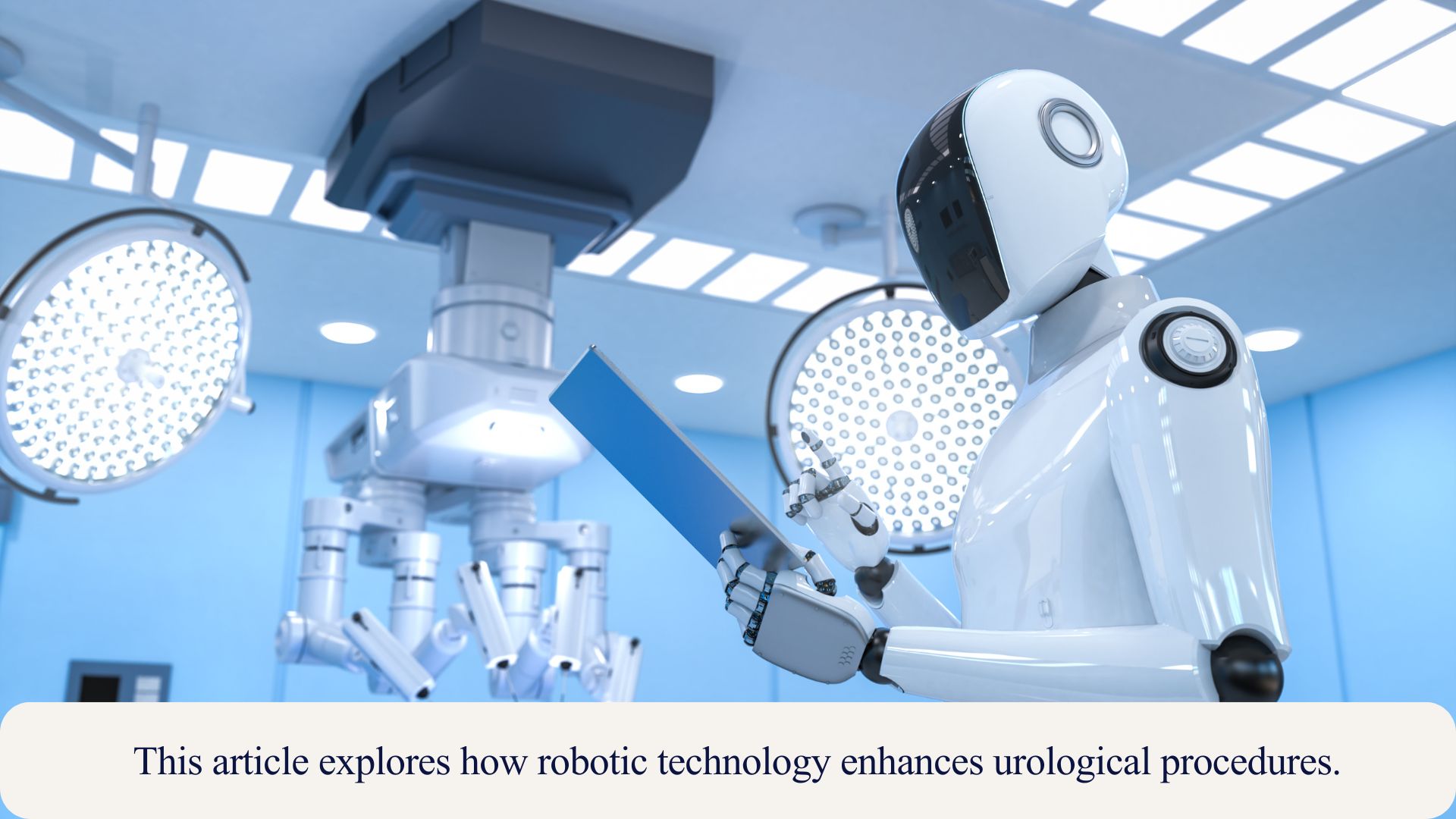
During robotic surgery, I sit at a console placed a few feet away from the patient. From there, I control robotic arms that hold a 3D high-definition camera and fine surgical instruments. Every movement of my fingers is translated into tiny, precise movements of the instruments inside the body.
The system filters out hand tremors and scales my motions, so even a large hand movement can translate to a one-millimetre motion at the surgical site. This allows me to operate in confined areas, such as around the prostate or kidney, with enhanced accuracy and control.
Before the operation, the surgical team positions the patient and places small ports through which the robotic arms are docked. Once connected, I begin operating from the console while monitoring the 3D view. The robot provides up to 10 times magnified vision, allowing me to see nerves, blood vessels, and tissues more clearly than in open or laparoscopic surgery.
Why Use a Robot in Urology?
Urology deals with structures that are small, deep, and surrounded by important nerves. Robotic systems are particularly useful for surgeries such as radical prostatectomy, partial nephrectomy, and ureteral reconstructions.
Compared with open surgery, patients usually experience:
- Smaller incisions and minimal scarring
- Reduced blood loss
- Shorter hospital stays
- Faster return to work
For example, studies show that robotic prostatectomy patients lose 60–70% less blood and are discharged a day earlier than those undergoing open surgery.
What Robotic Surgery Does Not Do
Many patients believe the robot performs the surgery by itself. That’s not true. The robot cannot make independent decisions—it follows my hand movements precisely. Think of it as an advanced tool, not an autonomous machine.
Also, robotic surgery is not automatically “better” in every case. The results depend on the type of disease, the surgeon’s experience, and the hospital’s setup. For some complex or advanced cases, open surgery may still be the safer option.
What Happens During Surgery
Here’s what typically happens on the day of a robotic procedure:
- You receive general anaesthesia.
- I make 4–6 small incisions to insert the robotic instruments.
- The robot is docked, and I move to the console to operate.
- The camera provides a 3D view of the operative area.
- After surgery, I remove the instruments and close the small incisions.
Most patients can walk within 6–8 hours and go home in 1–2 days, depending on the procedure and recovery.
Safety and Complications
Robotic surgery is generally safe, with complication rates similar to or lower than open and laparoscopic methods. The most common risks include bleeding, infection, and, rarely, technical issues such as machine malfunction (which are extremely uncommon).
Globally, over 12 million robotic procedures have been performed since 2000, with a safety record of over 99% system uptime reported by Intuitive Surgical (2024). Outcomes improve significantly when the surgery is performed by experienced surgeons at accredited centres.
Who Is a Candidate?
I usually recommend robotic surgery for patients with:
- Prostate cancer requiring radical prostatectomy
- Kidney tumours suitable for partial nephrectomy
- Blocked ureters or ureteropelvic junction obstruction
- Certain bladder and reconstructive surgeries
Patients with severe heart or lung problems, or those unfit for anaesthesia, may not be ideal candidates.
Robotic Surgery in India: Current Scenario
India has seen the rapid adoption of robotic systems in recent years. As of 2025, there are over 150 surgical robots installed in major hospitals across the country, including AIIMS, Fortis, Apollo, and Manipal centres. Several government hospitals, such as KGMU Lucknow and AIIMS Raipur, now offer robotic urologic surgeries at subsidised rates.
The average cost in private hospitals ranges from ₹2.5 to ₹4.5 lakhs, depending on the procedure and city, while some public institutions provide it at a lower cost. Indigenous robotic systems, such as the SSI Mantra platform, are also making this technology more affordable.
My Takeaway for Patients
Robotic surgery is not magic—it’s precision made possible through advanced technology and surgical expertise. It combines the steadiness of a machine with the judgement of a trained surgeon. When used appropriately and safely, it helps patients recover faster with excellent outcomes.
If you are considering robotic surgery, talk to your urologist about their experience, the hospital’s facilities, and whether this technique truly suits your case.
Frequently Asked Questions
Q1: Is robotic urology surgery much more expensive in India than conventional surgery?
- I understand cost is a major concern. Robotic surgery in India typically costs more than open or laparoscopic surgery, but the difference is narrowing as more centres adopt it and competition improves.
Q2: Will I recover faster if I undergo robotic urology surgery?
- Yes — in many cases, I’ve found that robotic surgery allows smaller incisions, less bleeding, and quicker mobilization, meaning you often go home sooner and return to daily life faster than with open surgery.
Q3: Can any urology problem be treated by robotic surgery, or are there limits?
- There are limits. I explain that while many urological conditions (such as prostate cancer, kidney tumours, and reconstructive issues) can benefit from robotic assistance, the choice depends on your disease, anatomy, and overall health. Not every case is suitable.
Q4: Are there enough qualified robotic-urology surgeons and hospitals in India?
- We have made significant progress: India now has many trained robotic surgeons and centres with robotic systems. Still, I advise checking the surgeon’s experience, hospital volume, and machine age when you choose your centre.
Q5: What about safety and complications — is robotic surgery risk-free?
- No surgery is completely risk-free. While robotic surgery tends to have favourable safety profiles, I make sure patients know complications (bleeding, infection, need to convert to open surgery) still occur and depend significantly on the surgeon and centre.