Erectile dysfunction (ED) can affect confidence, relationships and quality of life. For many men, the problem also raises an important question: Is there a treatment that can improve erections rather than simply help me get an erection for a few hours?
Low-intensity shockwave therapy is one treatment that has gained attention for this reason. It is a non-invasive treatment that may improve erectile function by supporting the health of blood vessels in the penis.
In this article, I will explain the main benefits of shockwave therapy, who may benefit from it and what you should realistically expect from treatment.
What is shockwave therapy for erectile dysfunction?
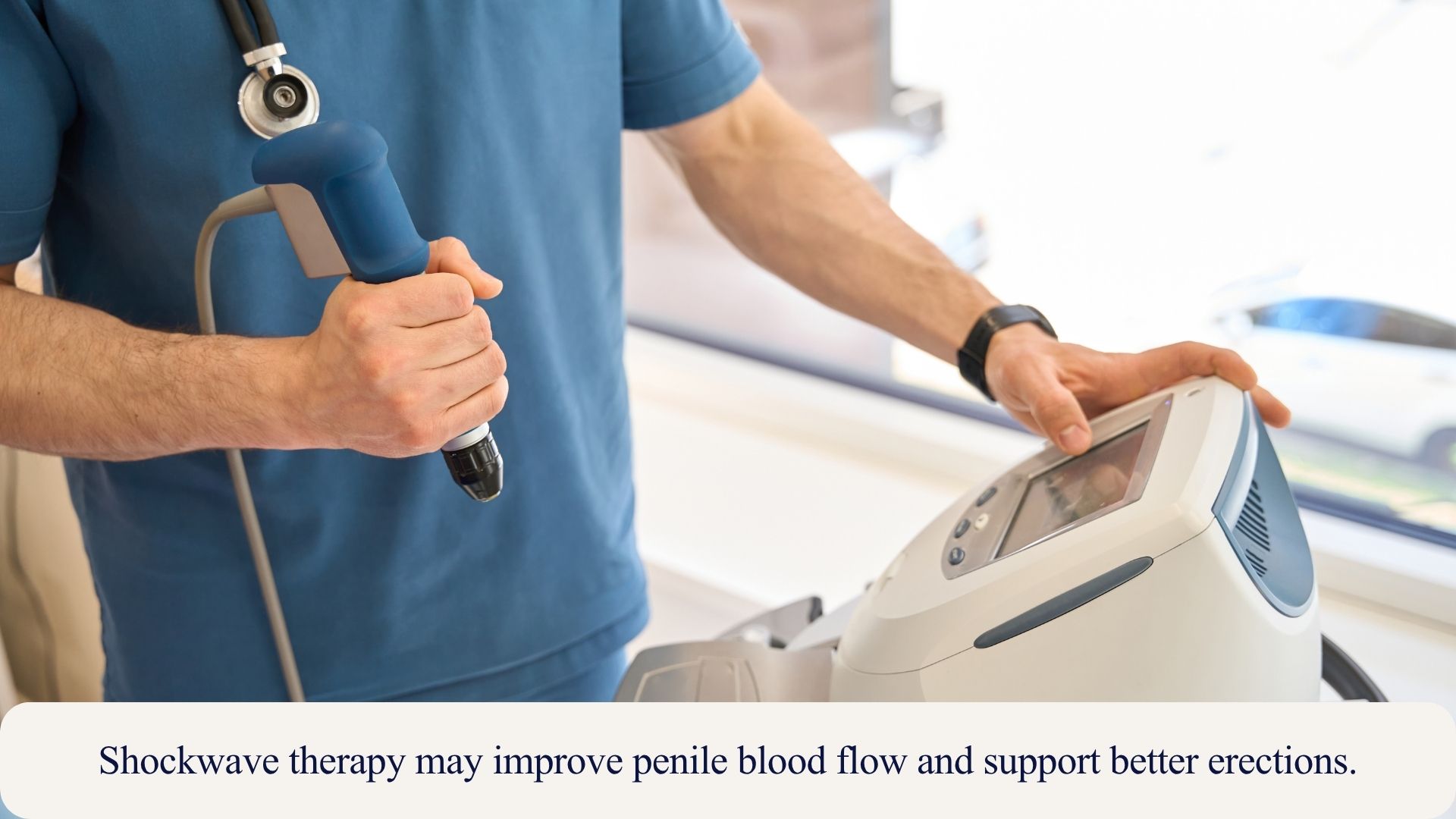
Low-intensity shockwave therapy, also called LiSWT, uses controlled sound waves delivered to specific areas of the penis.
Unlike the high-energy shockwaves used to break kidney stones, this treatment uses low-intensity energy. The aim is to stimulate biological responses within the erectile tissue.
Researchers believe these waves may support blood-vessel function and tissue repair. This may help improve the blood supply needed for a firm erection.
However, I do not describe shockwave therapy as a simple way of “opening blocked arteries.” The treatment works through biological processes that researchers are still studying.
What are the benefits of shockwave therapy?
1. It may improve erectile function
The biggest potential benefit is better erectile function.
A 2025 Cochrane review evaluated 21 randomized controlled trials involving 1,357 men. The review found that low-intensity shockwave therapy may provide a small improvement in erectile function and penile rigidity.
Earlier research has also reported improvements in erectile-function scores compared with sham treatment.
This means the treatment has shown genuine potential, particularly in men whose ED is linked to vascular problems.
2. It may support penile blood-vessel health
A healthy erection depends on healthy blood vessels.
During sexual stimulation, the blood vessels in the penis need to relax and allow sufficient blood to enter the erectile tissue. Problems with this process can lead to weaker erections.
Shockwave therapy may stimulate processes involved in blood-vessel growth and endothelial function. This is one of the main reasons researchers believe it may have a restorative effect rather than simply providing temporary assistance.
However, studies have produced mixed results when researchers measure penile blood flow directly. So, I would not promise that shockwave therapy restores blood flow in every patient.
3. It is non-invasive
Shockwave therapy does not require surgery or injections.
I can deliver the treatment externally using a specialized device. Most patients can return to their normal activities after a session.
This makes it an attractive option for men who want to explore a non-surgical approach to ED.
4. It may help selected men who do not get enough benefit from ED tablets
Medicines such as sildenafil and tadalafil remain established treatments for erectile dysfunction.
However, some men do not get a satisfactory response from these medicines.
The European Association of Urology recommends considering low-intensity shockwave therapy in selected men with mild vasculogenic ED, including some men who respond poorly to PDE5 inhibitors.
I would still assess the cause of ED before recommending shockwave therapy. A poor response to medication does not automatically mean shockwave therapy is the right next step.
5. It may be useful for men with vascular risk factors
ED becomes more common with age, and conditions such as diabetes, high blood pressure, high cholesterol and cardiovascular disease can affect erections.
When blood-vessel health contributes to ED, a treatment that targets vascular function may have a role.
But I would never treat the erection alone. I also want to identify and manage the factors that may be damaging your blood vessels.
6. It has a generally favourable safety profile
Another benefit is its tolerability.
Clinical studies have generally reported few serious treatment-related problems. Some men may experience temporary discomfort, redness or tenderness.
The 2025 Cochrane review found little difference in treatment-related adverse events between shockwave therapy and sham treatment.
Who may benefit the most?
I consider shockwave therapy most relevant for men with mild, blood-flow-related erectile dysfunction.
It may be worth discussing if you:
- Have mild to moderate ED
- Still experience some erections
- Have a vascular cause of ED
- Have an incomplete response to ED medicines
- Prefer a non-invasive treatment option
The severity and cause of ED matter more than age alone.
Is shockwave therapy a permanent cure?
I would be careful with this claim.
Research suggests that shockwave therapy can improve erectile function in some men, but we do not yet have strong enough evidence to call it a permanent cure.
Treatment protocols also differ between studies. The number of sessions, energy levels, treatment areas and devices can vary.
For this reason, I believe patients should focus on realistic improvement rather than guaranteed results.
The bottom line
Shockwave therapy is a promising non-invasive treatment for selected men with erectile dysfunction.
Research involving more than 1,300 men across 21 randomized trials suggests that it may improve erectile function and penile rigidity.
Its potential benefits include supporting vascular function, improving erectile performance and providing a non-surgical treatment option.
But the right treatment depends on the cause of your ED.
Before choosing shockwave therapy, I recommend a proper urological assessment. Once I understand why you are experiencing erectile dysfunction, I can tell you whether shockwave therapy is likely to benefit you or whether another treatment would be more appropriate.
Frequently Asked Questions About Shockwave Therapy for Erectile Dysfunction
1. Does shockwave therapy really work for erectile dysfunction?
Yes. Research shows that low-intensity shockwave therapy can improve erectile function in some men, particularly those with mild, blood-flow-related ED. I consider it a promising treatment, but I do not present it as a guaranteed cure.
2. Does shockwave therapy improve blood flow to the penis?
It may improve penile vascular function and support the blood-flow processes needed for an erection. However, studies have reported mixed results when measuring blood flow directly. I therefore assess the underlying cause of ED before recommending this treatment.
3. How many shockwave therapy sessions are needed for ED?
There is no universally accepted number of sessions. Clinical studies have used different treatment schedules, energy levels and numbers of shockwaves. I recommend a treatment plan based on the patient’s condition rather than promising a fixed number of sessions.
4. Is shockwave therapy for erectile dysfunction safe?
Yes. Low-intensity shockwave therapy is generally well tolerated. Some men may experience temporary discomfort, redness or tenderness. Serious complications appear uncommon in clinical studies, but I still assess each patient’s medical history before treatment.
5. Is shockwave therapy a permanent cure for erectile dysfunction?
I would not call it a permanent cure. Studies show that some men experience meaningful improvement, but long-term results remain uncertain. I focus on identifying the cause of ED and choosing the treatment that offers the best chance of lasting improvement.