
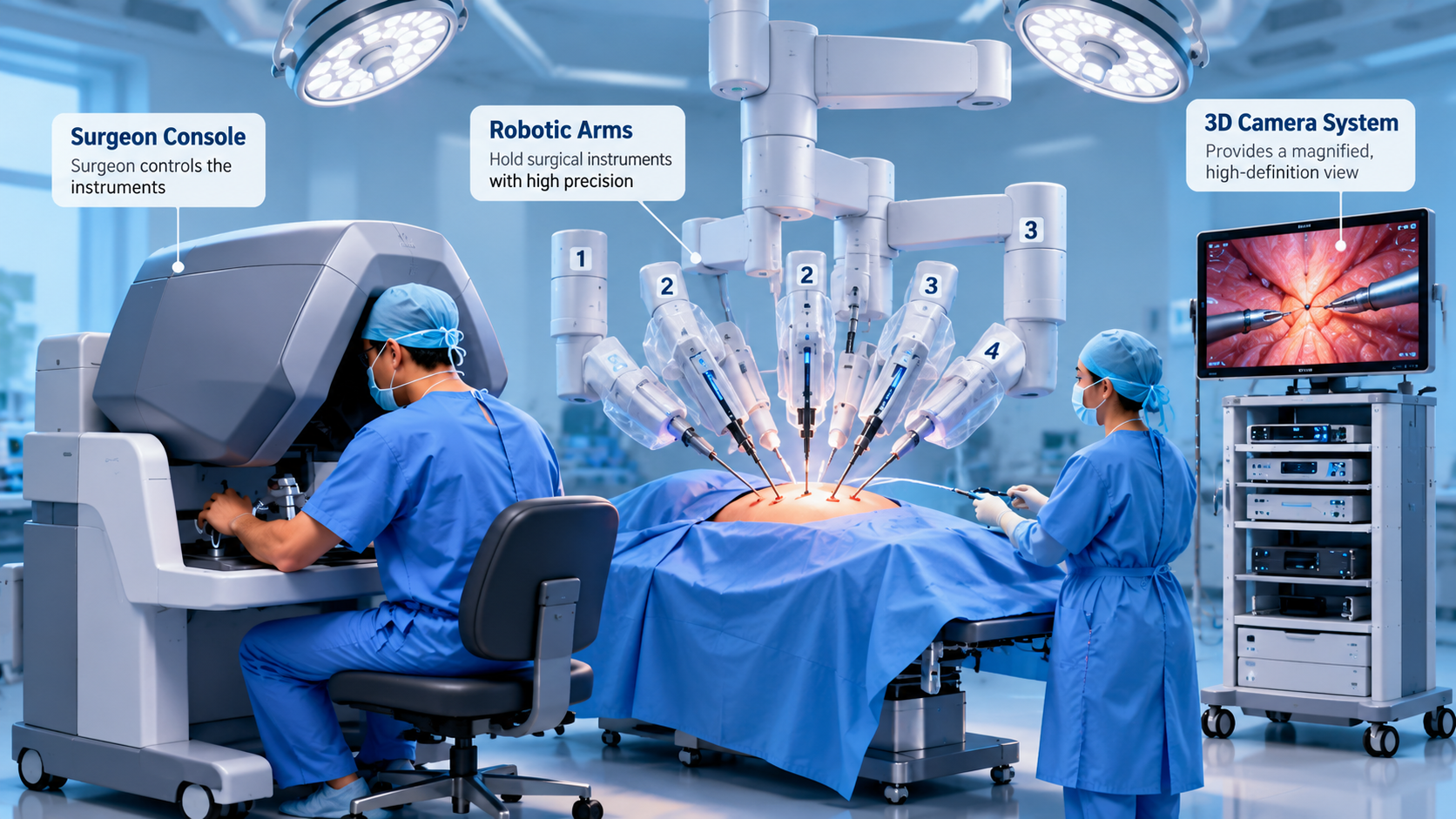
Robotic surgery has changed how doctors perform many operations, including procedures for prostate, kidney, and bladder conditions. However, many patients feel uncertain when they hear that a robot will assist with their surgery.
As a urologist, I understand these concerns. Patients want to know whether robotic surgery is safe, whether a machine controls the operation, and how long recovery will take.
Robotic surgery can be safe and effective for suitable patients, but it is not risk-free. The outcome depends on the patient’s condition, the type of surgery, and the surgeon’s experience.
Let me explain what you should know before making a decision.
 What Is Robotic Surgery, and How Does It Work?
Robotic surgery is a type of minimally invasive surgery in which a surgeon controls specialised instruments through a robotic system.
The surgeon sits at a console and guides the instruments using hand controls. A camera provides a magnified, three-dimensional view of the surgical area.
The robot does not perform the operation independently. The surgeon controls the instruments and makes the clinical decisions throughout the procedure.
In urology, surgeons may use robotic assistance for selected prostate, kidney, and bladder operations.
 Is Robotic Surgery Safer Than Traditional Surgery?
Robotic surgery can offer advantages over open surgery, depending on the procedure and the patient’s condition.
These advantages may include:
- Smaller incisions.
- Less blood loss in some procedures.
- Less postoperative pain.
- A shorter hospital stay.
- Earlier return to normal activities in suitable cases.
A 2023 systematic review comparing robotic and open radical prostatectomy reported approximately 517 mL less estimated blood loss and a hospital stay around 1.6 days shorter with robotic surgery.
However, these findings relate specifically to prostate surgery. They do not mean robotic surgery is always safer or better than open or conventional laparoscopic surgery.
I recommend choosing the surgical approach that best suits your condition rather than choosing a procedure simply because it uses advanced technology.
 What Are the Risks of Robotic Surgery?
Like any major operation, robotic surgery carries risks. These may include:
- Bleeding and infection.
- Injury to nearby organs or tissues.
- Blood clots.
- Reactions to anaesthesia.
- Problems related to positioning during surgery.
- Complications that require another procedure.
The risks vary according to the operation, your general health, and the complexity of your condition.
For example, robotic prostate surgery may affect urinary control or erectile function. Kidney surgery carries different risks depending on the condition being treated.
Before surgery, I encourage patients to discuss their individual risks and expected outcomes with their urologist.
What Are the Common Fears About Robotic Surgery?
Does the robot perform surgery without the doctor?
No. The surgeon controls the robotic instruments and makes decisions throughout the operation. The system assists with precision and instrument movement, but it does not replace the surgeon’s judgment.
What happens if the robotic system malfunctions?
Technical problems are possible, although the surgical team prepares for them. The team may pause the operation, troubleshoot the problem, or switch to another surgical approach if necessary.
In some cases, the surgeon may need to convert to open surgery. This is a safety decision, not necessarily a sign that the operation has failed.
Is robotic surgery painful?
Patients may experience pain or discomfort after robotic surgery, but smaller incisions can reduce postoperative pain in some procedures. Your surgeon and anaesthesia team will plan pain relief according to your needs.
Is robotic surgery suitable for everyone?
No. Your medical history, general health, diagnosis, and the complexity of the operation all matter. I assess these factors before recommending a surgical approach.
 How Long Does Recovery Take After Robotic Surgery?
Recovery depends on the procedure and your overall health.
Many patients begin walking soon after surgery. Some return home within a few days, while others need a longer hospital stay or additional care.
After robotic prostate surgery, patients may need a urinary catheter temporarily. Urinary control and sexual function may also take time to recover, and improvement varies between individuals.
Follow your surgeon’s instructions about activity, wound care, medication, and follow-up visits. Contact your medical team if you develop concerning symptoms such as fever, worsening pain, breathing difficulty, or significant bleeding.
Is Robotic Surgery More Expensive?
Robotic surgery may cost more than some conventional procedures because of equipment, operating costs, and hospital charges.
The total cost depends on the hospital, the type of surgery, the length of your stay, and any additional treatment you need.
Before deciding, ask for an estimate of the total cost and check what your insurance covers. Consider the expected benefits, risks, and alternatives rather than comparing prices alone.
What Should You Ask Your Urologist Before Surgery?
I encourage patients to ask these questions during their consultation:
- Why do I need surgery, and what alternatives are available?
- Why do you recommend a robotic approach for my condition?
- What are the main risks in my case?
- How much experience do you have with this specific procedure?
- Could the operation affect urinary control or sexual function?
- How long might recovery take?
- What happens if the surgical team needs to change the approach?
- What is the estimated total cost?
These questions can help you understand your options and make an informed decision.
 Final Thoughts: Is Robotic Surgery Right for You?
Robotic surgery can offer important benefits for suitable patients, but no surgical approach guarantees a complication-free outcome.
The right decision depends on your diagnosis, overall health, available treatment options, and your surgeon’s assessment.
As a urologist, I believe patients should understand both the benefits and limitations of surgery before proceeding. Discuss your concerns openly with your doctor and make sure you understand the expected outcomes and possible risks.
If you are considering robotic urological surgery, consult a qualified urologist to understand which approach best suits your condition.
FAQ section for the blog
1. Is robotic surgery safe?
Yes, robotic surgery can be safe for suitable patients when a trained surgical team performs it. However, it carries risks like any operation. I assess your condition, medical history, and treatment options before recommending robotic surgery.
2. Does a robot perform surgery without a doctor?
No. I control the robotic instruments throughout the operation. The robotic system helps me move the instruments with precision and provides a magnified view of the surgical area. It does not independently make surgical decisions.
3. What are the risks and complications of robotic surgery?
Possible complications include bleeding, infection, blood clots, anaesthesia-related problems, and injury to nearby tissues. I explain the risks specific to your condition before surgery because they vary according to the procedure and your overall health.
4. How long does it take to recover from robotic surgery?
Recovery depends on the type of surgery, your general health, and any complications. Some patients return home within a few days, while others need longer. I provide individual recovery instructions and advise when you can resume normal activities.
5. Is robotic surgery more expensive than traditional surgery in India?
Robotic surgery may cost more because of equipment and hospital charges. The final cost depends on the procedure, hospital, and length of stay. I recommend requesting an itemised estimate and confirming your health insurance coverage before making a decision.