Erectile dysfunction (ED) can affect a man’s confidence, relationships and quality of life. For some men, medicines such as sildenafil or tadalafil may not provide enough improvement. Others may want to avoid regular penile injections or surgery.
In recent years, Botox therapy for erectile dysfunction has attracted interest as a minimally invasive treatment option.
But how can Botox, a treatment better known for reducing facial wrinkles, help a man achieve a better erection?
The answer lies in how an erection develops and how Botox affects the smooth muscles inside the penis.
What Is Botox Therapy for Erectile Dysfunction?
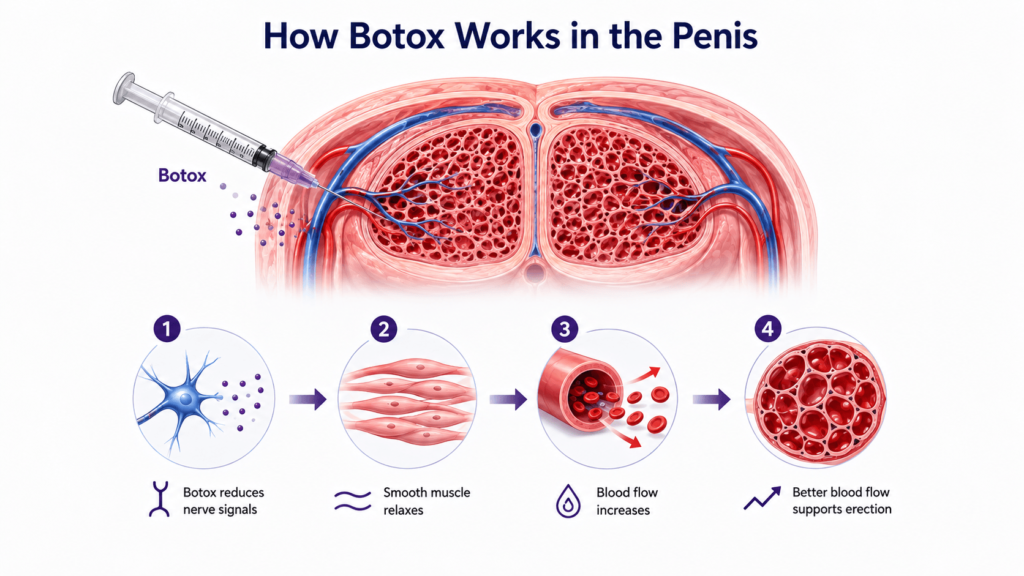
Botox therapy uses botulinum toxin type A, also known as Botox, to target the smooth muscle within the erectile tissue of the penis.
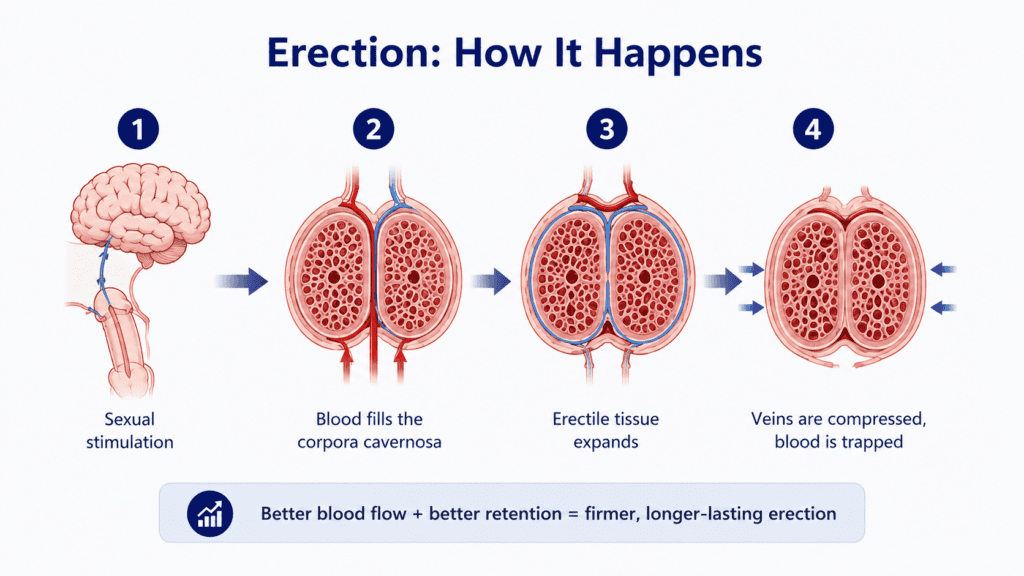
During an erection, the smooth muscle in the corpora cavernosa must relax. This allows blood to flow into the penis and fill the erectile chambers. As the chambers fill, the penis becomes larger and firmer.
In some men with ED, excessive smooth-muscle contraction may interfere with this process.
Botox may help by reducing the nerve signals that cause smooth-muscle contraction. This can promote relaxation of the cavernosal smooth muscle and may allow more blood to enter the erectile tissue.
In simple terms, the goal of Botox therapy is to help the erectile tissue relax so that the penis can receive and maintain more blood during sexual stimulation.
How Can Botox Improve Erectile Dysfunction?
I look at the potential benefit of Botox from three important angles: blood flow, erection hardness and sexual performance.
1. Botox May Improve Penile Blood Flow
Adequate blood flow is essential for a firm erection.
When the smooth muscle inside the penis relaxes, the arteries can deliver more blood into the corpora cavernosa. Early clinical research suggests that Botox may improve this process.
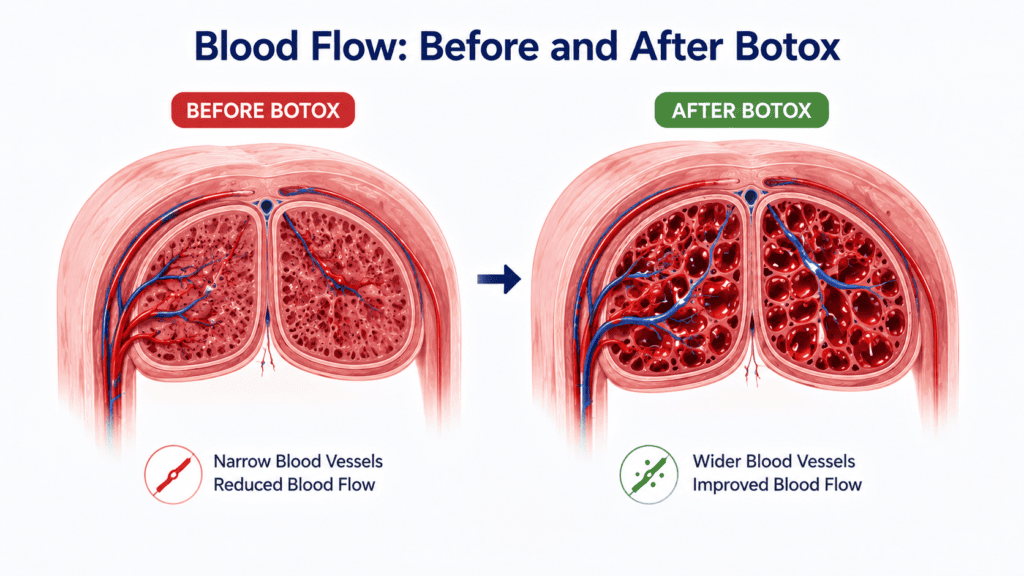
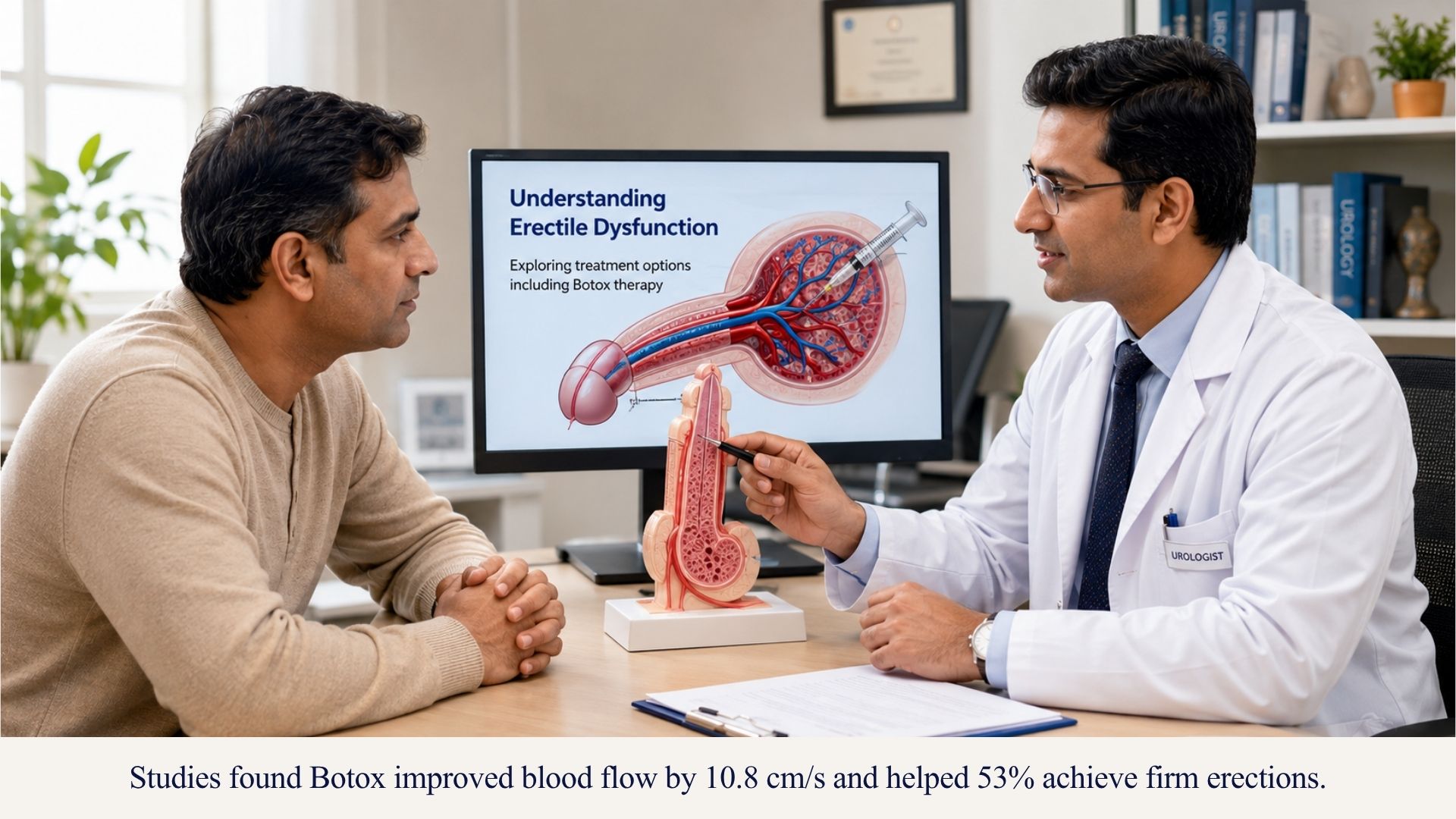
In one human study, the average peak systolic velocity, a measure of penile arterial blood flow, increased from 24.6 cm/s to 34.9 cm/s after Botox treatment. Researchers also observed improvements in erectile-function scores and erection hardness.
A later meta-analysis also found a significant improvement in penile blood-flow measurements following botulinum toxin treatment.
This is encouraging because better blood flow can provide the foundation for a stronger erection.
2. Botox May Improve Erection Hardness
Blood needs to enter the penis and remain there to produce a rigid erection.
Research has reported improvements in the Erection Hardness Score (EHS) following Botox treatment. In the early clinical study, the average EHS increased from 2.0 to 2.75.
Other randomized trials have also reported improvements in erection hardness among men with difficult-to-treat ED.
This means Botox may not simply increase blood flow. In selected patients, that improved blood flow may translate into a more useful and firmer erection.
3. Botox May Improve Sexual Performance
For a patient, the most important question is not whether a scan looks better. It is whether he can have satisfactory sexual activity.
This is where the early results are promising.
One study found that 7 of 12 men treated with Botox were able to achieve penetrative intercourse with the help of sildenafil. Three of those seven men maintained their erection long enough to complete intercourse.
In another randomized trial involving men who did not respond adequately to conventional ED medicines, 53% reported an erection hard enough for vaginal penetration after treatment.
These findings suggest that Botox may help some men move beyond simply achieving an erection to actually improving their sexual function.
Can Botox Make an Erection Last Longer?
A stronger erection and a longer-lasting erection are related but not exactly the same.
Botox may help by improving smooth-muscle relaxation and blood entry into the erectile tissue. This can potentially make it easier to achieve and maintain an erection.
However, the penis must also retain blood effectively. If a patient has a problem with the mechanism that keeps blood inside the penis, increasing blood flow alone may not completely solve the problem.
Therefore, I evaluate the underlying cause of ED before considering Botox therapy.
Who May Benefit From Botox Therapy?
Botox is particularly interesting for men with severe or treatment-resistant ED.
It may be considered in selected men who:
- Do not achieve satisfactory erections with PDE5 inhibitors such as sildenafil or tadalafil
- Have not obtained enough benefit from other established treatments
- Want to explore a less invasive option
- Want to avoid or postpone penile prosthesis surgery
- Have suitable penile blood-flow and erectile-function findings after medical evaluation
A proper assessment remains important because ED can have many causes, including vascular disease, diabetes, hormonal problems, nerve problems and psychological factors.
Is Botox a Replacement for a Penile Implant?
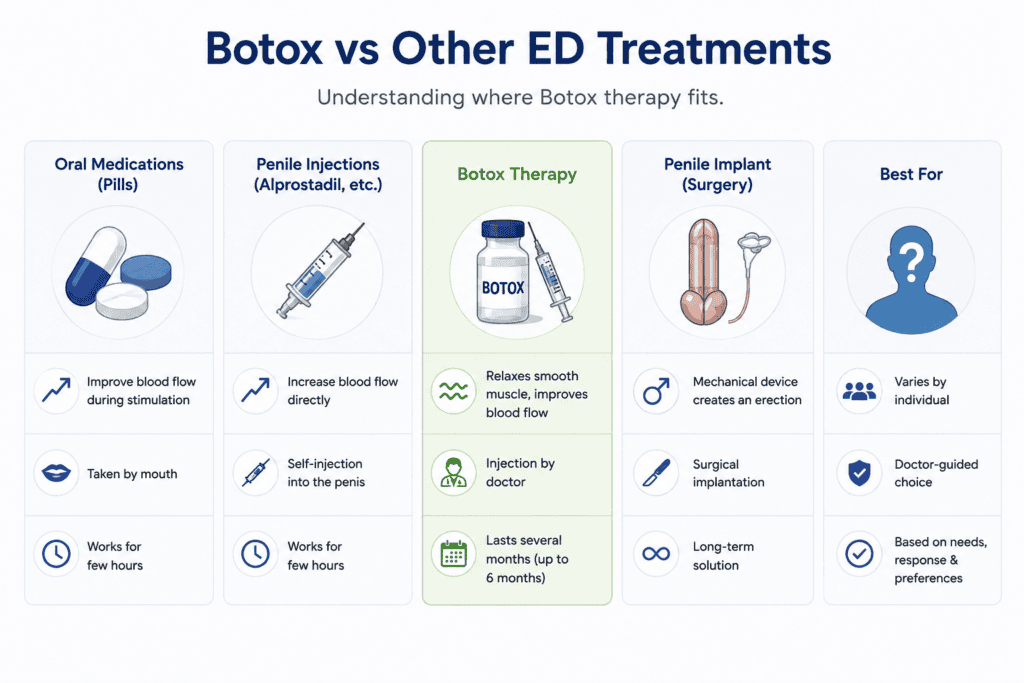
For some men, Botox may provide another option to explore before considering an implant.
However, I would not call it a replacement for penile prosthesis surgery at this stage. Botox therapy is still an emerging treatment, and researchers are continuing to study the ideal dose, patient selection, duration of benefit and long-term results.
The positive point is that early research has shown meaningful improvements in blood flow, erection hardness and sexual function, particularly among men who have been difficult to treat with conventional therapies.
The Bottom Line
Botox therapy offers an interesting new approach to erectile dysfunction.
By helping relax the smooth muscle inside the penis, Botox may improve blood flow into the erectile tissue. This can potentially lead to better erection hardness, improved ability to maintain an erection and better sexual performance.
For men with severe ED who have not responded well to conventional treatments, Botox may therefore be worth discussing with a qualified urologist.
It is not a guaranteed solution, but the early evidence is encouraging and gives selected patients another treatment option to consider before moving to more invasive solutions.

Frequently Asked Questions About Botox Therapy for Erectile Dysfunction
1. How does Botox therapy work for erectile dysfunction?
I use Botox to target the smooth muscle inside the erectile tissue of the penis. It can reduce nerve signals that cause muscle contraction, helping the smooth muscle relax. This may allow more blood to enter the penis and improve erection quality.
2. Can Botox make erections harder and improve blood flow?
Early studies suggest that Botox can improve penile blood-flow measurements and erection hardness. One randomized trial found significant improvements in both peak systolic velocity and Erection Hardness Score after treatment.
3. Can Botox help if Viagra or Cialis does not work?
It may help selected men with erectile dysfunction who do not respond adequately to PDE5 inhibitors such as sildenafil or tadalafil. In one randomized trial, 53% of men treated with Botox achieved an erection hard enough for vaginal penetration.
4. How long does Botox for erectile dysfunction last?
Current studies suggest that the benefits may last for several months. Some research has reported effects lasting up to six months. However, the duration varies between patients, and researchers are still studying the ideal timing for repeat treatment.
5. Can Botox for ED help me avoid a penile implant?
Botox may offer selected men another treatment option before considering penile implant surgery. I would not currently consider it a proven replacement for an implant because larger, long-term studies are still needed. However, the early results in treatment-resistant ED are encouraging.
Based on the article’s search intent and the questions patients are likely to ask, I recommend focusing the primary keyword “Botox for erectile dysfunction” while naturally including blood flow, erection hardness, and sexual performance.